Reducing emissions with local action
By Fraser Young, Regional VP Sales & CME Regional Management APAC, Itron
Tuesday, 14 July, 2026
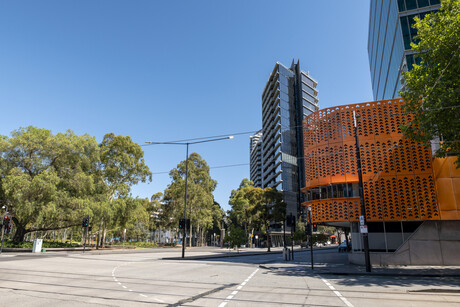
Australia’s 2035 emissions target will be set nationally; however, the proof will be local.
The practical test will sit in council buildings, streetlights, depots, water assets, transport infrastructure and precinct planning decisions. These are the assets communities rely on every day and where emissions reduction can become visible, measurable and accountable.
Australia has committed to reducing emissions by 62–70% below 2005 levels by 2035. The Climate Change Authority has warned that to stay on track, the rate of reductions must double in the five years to 2030 and triple in the decade to 2035. That makes the next phase of climate action less about setting targets and more about execution.
For councils, this raises practical questions: which assets should be upgraded first, where will investment deliver the strongest emissions and operating-cost outcomes and how can results can be measured over time? The councils that move fastest will be those that treat emissions reduction as a data-led infrastructure challenge, using asset, energy, water and network intelligence to guide decisions before capital is committed.
Start with the assets councils already manage
Local government is one of the most asset-intensive parts of the public sector. Councils are responsible for about one-third of Australia’s public infrastructure and manage more than $640 billion in assets, including roads, buildings, facilities, airports, water and land.
A council’s climate strategy cannot sit separately from its asset strategy. Emissions are embedded in how public buildings are heated and cooled, how streetlights operate, how water systems are managed, how depots are electrified and where EV charging infrastructure is deployed.
The challenge is that these systems are often assessed separately. Building operations, lighting, water assets, fleet planning and local electricity constraints can sit across disconnected teams and datasets. As electrification accelerates, councils will increasingly need a connected view of infrastructure performance to prioritise investment effectively. Many councils have already developed emissions inventories, but an inventory only shows where emissions exist across an organisation. It does not automatically identify which facilities, networks or operational assets should be upgraded first.
The next step is asset-level intelligence. Councils need to understand energy use, water consumption, asset condition, operating patterns and network constraints together, so climate action becomes a coordinated infrastructure program rather than a collection of isolated projects.
Find the highest-impact reductions first
The strongest emissions strategies will be those that rank action by impact, cost and operational value.
For example, a council may know that its building portfolio is a major source of electricity use. What it needs to know is which buildings are driving avoidable consumption and why. Poor thermal performance, inefficient HVAC systems, outdated lighting, aging equipment or extended operating hours can all contribute to unnecessary demand peaks.
This is where infrastructure intelligence becomes invaluable. It can help councils move from broad upgrade lists to evidence-led sequencing, identifying which aquatic centres, depots, libraries or community facilities have the clearest emissions, cost and resilience benefits.
Buildings are a logical starting point because they are visible, energy-intensive and directly linked to public services. Smart building infrastructure can reduce energy consumption and emissions through technologies such as efficient lighting, smart HVAC, better controls and renewable energy sources.
A building retrofit should be able to show baseline consumption, expected savings, actual savings and the operational changes needed to sustain performance after the upgrade. That evidence matters because the real test is not whether an asset has been modernised, but whether it is performing better over time.
Treat lighting as measurable infrastructure
Streetlighting is one of the clearest examples of local infrastructure that can deliver measurable gains.
Lighting networks are widespread, costly to run and highly visible to communities. LED upgrades can reduce energy use, while smarter lighting systems can add better fault detection, dimming, maintenance planning and energy measurement. Australian councils are already proving the case. Connected streetlighting rollouts are underway across metropolitan and regional local government areas — from Sydney’s western councils to Melbourne’s growth corridors — with LED upgrades typically cutting lighting energy use by up to 60% while extending asset life.
The next wave is going further, layering networked controls onto the same infrastructure to enable remote monitoring, adaptive dimming, real-time fault detection and integration with broader smart city applications such as environmental sensing and EV charging.
For councils under pressure to stretch every infrastructure dollar, that means the same capital spend delivers not just emissions and cost reduction today, but a platform for future services.
Connect buildings, water, transport and energy
The next stage of council climate action will require more connected infrastructure planning.
Electrification of council fleets, buildings and EV charging infrastructure can affect electricity demand and local load. Water assets are a good example. Pumping, treatment and pressure management are energy-intensive and often run around the clock, making them significant contributors to some councils’ electricity use and emissions. When batteries, solar and demand management are coordinated across water, building and depot loads, councils can shift consumption away from peak periods, reduce costs and strengthen network resilience.
Data centres are also sharpening this challenge. The rapid growth of AI and cloud services is driving a new wave of large, energy-intensive facilities, often concentrated in the same growth corridors where councils are also planning for housing, industrial land and community infrastructure. For local government, this raises immediate questions about network capacity, water use for cooling, waste heat, land-use planning and how new load interacts with existing electrification programs.
This is where councils and utilities need closer coordination. Electrification will place greater pressure on local electricity networks as demand patterns become more dynamic across communities. At the low-voltage level, distribution networks are already managing more dynamic two-way flows, meaning local infrastructure decisions can no longer be made without visibility into network capacity, demand timing and future growth.
Councils that engage early with utilities, developers and state planning bodies, will be better placed to shape outcomes rather than react to them. Before major public assets are electrified, before charging hubs are installed and before precincts are redesigned, councils will understand local network conditions and where flexibility may reduce cost or avoid delays.
Make measurement the discipline
For councils, the risk is that limited capital is spent on visible upgrades before the underlying infrastructure data shows where emissions, costs and network pressures are actually sitting.
Poorly targeted upgrades can lock councils into expensive decisions without delivering the strongest emissions outcome. A building may be electrified before efficiency is improved. EV chargers may be placed where local network capacity is constrained. Water assets may be renewed without understanding whether leaks, pressure imbalances or abnormal demand patterns are driving avoidable costs.
Better visibility helps councils make stronger capital decisions. Before investing, councils should seek to answer the following practical questions:
- What is the baseline performance of the asset?
- What is driving avoidable cost, emissions or risk?
- Which intervention will deliver the strongest return?
- How will the result be measured after delivery?
This will become increasingly important as sustainable investment becomes more evidence-driven. Grant programs, green finance and public–private partnerships are increasingly likely to favour projects that can show the baseline problem, the proposed intervention, the expected reduction and the data that will be used to verify performance over time.
From national targets to local proof
Australia’s 2035 emissions reduction target may be national, but delivery will happen locally. For local government, progress will increasingly be measured through capital works programs, infrastructure renewal decisions and the operational performance of public assets communities use daily.
|
Councils that combine infrastructure planning with operational intelligence will be better positioned to reduce emissions, strengthen resilience and direct investment where it delivers the greatest long-term value. The 2035 target sets the direction. For councils, the shift will be treating climate strategy and asset strategy as one: planning, prioritising and measuring infrastructure investment as the primary lever for turning national ambition into credible local emissions outcomes. |
 |
From crisis to capability: how AI is transforming public sector crisis response
In an era of compounding climate-driven disasters, governments must move beyond reactive...
Data streams and city dreams: how real-time data is transforming urban living
We are entering the era of smart cities, where cutting-edge technologies like real-time data...
Data challenges in city infrastructure and transport systems
In today's landscape of digital transformation efforts by cities and transportation...