Curtin researchers use NVIDIA tech to model shipwrecks
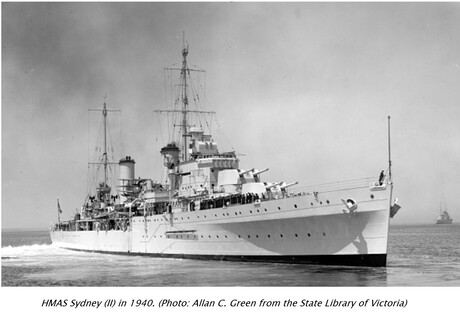
Researchers at Curtain University are using 3D imaging technology supported by NVIDIA to develop 3D models of the wreckage of Australia’s HMAS Sydney (II) and Germany’s HSK Kormoran, which both sank following a naval battle in 1941.
The detailed models will allow visitors to museums in Perth and Sydney to explore the sunken ships as if they were scuba divers on the ocean floor.
The researchers are using a technology known as photogrammetry to take detailed stereoscopic 3D images of the wreckage of one of Australia’s greatest naval battles.
The battle took place on 19 November 1941. More than 700 soldiers died, including every sailor on the Sydney. Both ships sank to 8000 feet, 130 miles off the coast of WA, and the wrecks were not rediscovered for decades.
Andrew Woods, an expert in stereoscopic 3D visualisation and associate professor at Curtin, built an underwater rig with more than a dozen video and still cameras to capture details of the wrecks in 2015, capturing around 500,000 pictures and three hours of video.
These images are being processed using NVIDIA GPUs at the Pawsey Supercomputing Centre to create a virtual reality display as well as large-scale, 3D-printed models of the wrecks.
In future, the researchers hope to use an NVIDIA technology known as Instant NeRF to turn 2D images of future shipwreck surveys into 3D models in real time.
North Sydney Council updates planning assessment system
North Sydney Council has selected the Objective Build platform to improve development assessment...
Berrigan Shire Council adopts satellite imagery application
Berrigan Shire Council in southern NSW has selected the Spatial Distillery Company’s Vantor...
ACMA releases latest five-year spectrum outlook
The ACMA has released its five-year spectrum outlook, providing an overview of what is likely to...