Answering the call to transform our emergency services
By Con Balaskas, Australia and New Zealand Managing Director Motorola Solutions
Tuesday, 31 March, 2026
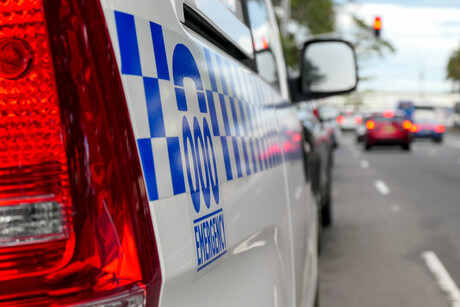
Much has changed in Australia since Canberra introduced the Triple Zero (000) emergency service more than 60 years ago.
Designed for an era when public phone booths lined street corners and rotary dial phones occupied our homes, the brand behind our national emergency hotline has long survived the legacy infrastructure it was once based upon. In fact, the former Postmaster-General’s Department chose the number 000 in 1961 because it was easier to dial on a rotary phone, especially in the dark or when surrounded by smoke.
The technology we use to call for help has since evolved dramatically, with most emergency calls now made via smartphones. With high-definition cameras to film unfolding events, GPS to identify caller locations and internet connectivity, today’s smartphones make it possible to share much more of what we see and hear taking place in our communities. Despite these advances, public safety emergency systems are still largely based on voice communication and not yet fully equipped to ingest the wealth of valuable, contextual data that modern devices can generate.
From voice to vision
Focus on our national emergency hotline has intensified recently, after cellular network outages led to missed emergency calls, influencing the federal government’s decision to bolster the powers of the Triple Zero custodian.
In Australia and globally, the digital transformation of call-taking systems is already underway. The goal for public safety agencies is to streamline and accelerate emergency response — not only by answering urgent calls for support, but by receiving, interpreting and acting upon data in all its forms.
This includes modernising control rooms to receive relevant images, video and social media content from the public and providing richer incident awareness for first responders on the scene. For instance, allowing a Triple Zero caller to share video of a car accident could help dispatchers determine how best to respond and contribute to a better and faster response.
Some public safety agencies are embracing this shift. For example, the New Orleans Office of Homeland Security and Emergency Preparedness offers a dedicated public safety app that enables residents and visitors to report emergencies or suspicious activity with the push of a button.
As community expectations rise to share more data with public safety agencies, the modernisation of emergency call-taking systems needs to keep pace with the way different generations of Australians communicate — quickly, visually and across multiple platforms.
An independent study commissioned by Motorola Solutions reveals that while an overwhelming 88% of respondents prefer to contact emergency services by phone, there’s also strong support for SMS/text messaging (41%) and smartphone apps (38%).
The study also found that while the public is comfortable with sharing their exact location data (86%), personal information about medical conditions/allergies (75%) and wearable health data from smartwatches, rings and other devices (54%), they have lower expectations that our emergency services are actually capable of receiving and using that data to improve emergency response (by 1%, 20% and 16% respectively).
Embracing AI in emergency management
With artificial intelligence so prominent in our daily lives, it’s surprising that the research found that 78% of people were unaware AI is already being used or developed for emergency call handling.
When asked specifically where they’d like to see AI used in emergency call taking, almost 60% chose detecting critical key words such as ‘knife’ or ‘collision’, ranking emergency calls by urgency (55%), and automatically identifying potential safety threats in live video footage and enabling live translations of callers speaking foreign languages (both 52%).
Using AI to process this critical information means it can be better analysed, augmented, and organised before it reaches human responders. This can save vital time during emergencies, when speed and precision can help to save lives.
In its 2025 white paper, ‘Emergency Communications in Australia’, National Emergency Communications Working Group – Australia/New Zealand, a representative body of public safety communications experts, identified several opportunities to use AI in emergency communications and dispatch. These include using AI to free up time for call takers to focus on urgent tasks and offering multilingual, real-time translation of emergency calls.
Building resilient systems
Unlike ordinary ICT or telecom systems, public safety call-handling systems are designed with the highest levels of security and availability, reflecting the essential and life-saving capabilities they can provide. These systems deliver enhanced location services, providing precise and timely information to facilitate faster and more effective emergency response.
As it approaches its eighth decade of operation, the nation’s Triple Zero service remains an enduring symbol of help in times of crisis.
For Australia, the next wave of modernisation is an opportunity to redefine emergency response in a connected society, where voice, data, multimedia content and AI-powered capabilities come together to help keep our communities safe.
5G: Foundation for connected mobility
5G is the driving force behind safe and connected mobility, transforming the future of vehicles...
Interview: Jason MacBride, Neat
In our annual Leaders in Technology series, we ask the experts what the year ahead holds. Today...
Interview: John Hopping, Ericsson
For our annual Leaders in Technology series we are discussing system complexity and customer...