
Are Australia's critical assets ready for bushfire season?
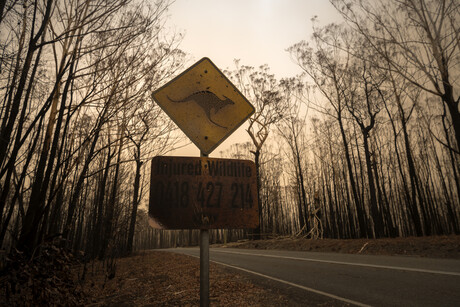
With summer looming and a strong El Niño now firmly established, Australia is entering another high-risk bushfire season.
As governments and infrastructure operators prepare for severe fires, storms, floods and extreme heat, much of the focus will naturally be on emergency response, community safety and maintaining essential services.
However, some of the most important preparation happens well before the first warning is issued. Just as important is knowing what assets you have, where they are, their condition, who is responsible for them and how important they are to keeping communities functioning.
Why asset visibility matters before disaster strikes
During the 2019–20 Black Summer bushfires, the NSW Audit Office found 68 NSW councils did not record $119 million worth of rural firefighting equipment in their financial statements. While, thankfully, there was no evidence this affected operational firefighting at the time, the finding raised an important question about how confidently governments can plan for future disasters without complete oversight of the assets available to them.
The NSW Audit Office subsequently recommended a full stocktake and condition assessment, and by 2022 found some councils had still not completed procedures to confirm the completeness, accuracy, existence or condition of those assets.
Without a reliable view of what they own, where it is, what condition it is in and who is responsible for it, governments can be left making preparedness and recovery decisions with gaps in the information they need. This becomes even more important once an emergency is underway, because roads, bridges, utilities and other infrastructure often depend on one another to keep essential services operating.
During the January 2026 Victorian bushfires, more than 100 local and arterial roads were closed, according to Transport Victoria, while a regional review of Black Summer found almost $10 million in damage to Shoalhaven’s road network, including four destroyed timber bridges. The same regional review also found road and bridge access was essential to allowing 20-tonne utility trucks to reach damaged sites, restore power and telecommunications, and resupply communities with food and fuel.
These events demonstrate why governments need to understand not only what assets exist, but also which services rely on them and where the loss of one asset can create broader disruption.
From ‘fix fast’ to ‘fix first’ and ‘fix right’
Australia’s exposure to natural disasters is becoming increasingly expensive, with the 2025 National Climate Risk Assessment projecting annual disaster costs could reach around $40.3 billion by 2049–50.
With that level of financial exposure, governments and infrastructure operators cannot afford to make recovery decisions from incomplete or outdated asset information. When infrastructure is damaged or destroyed, they need to quickly establish what existed, what condition it was in, what services depended on it, whether it should be repaired or replaced and how urgently that work needs to happen.
That requires a shift away from simply trying to ‘fix fast’ towards understanding what to ‘fix first’ and, increasingly, what to ‘fix right’. The most visible damage will not always represent the most important recovery priority, particularly where one asset supports access to power, telecommunications, water or other essential services.
Likewise, automatically rebuilding infrastructure on a ‘like-for-like’ basis can recreate the same vulnerability, whereas recovery can provide an opportunity to replace damaged assets with infrastructure better suited to future conditions.
The financial case for resilience
Considering resilience earlier can also make financial sense. World Bank research estimates that making infrastructure more resilient can add around 3% to upfront costs, which is relatively modest when considered against the value of major roads, bridges and other essential infrastructure, and the disruption, repair and recovery costs that can follow when those assets fail.
The Institute of Public Works Engineering Australasia (IPWEA) argues that climate risk needs to be considered across the entire asset lifecycle, from planning and design through to operation, maintenance, renewal and replacement, rather than only once damage has occurred.
For governments and infrastructure operators, accurate asset information is a fundamental part of resilience planning. Clear records of what exists, the condition of those assets and how they connect to the wider infrastructure network give decision-makers a stronger basis for preparing before an event, responding when it occurs and prioritising recovery investment afterwards.
|
As another bushfire season approaches, organisations with the clearest picture of their infrastructure will be better positioned to restore essential services quickly and make decisions that leave both those assets and the communities that depend on them better prepared for the next event. |
 |
Why unified observability is emerging as government's next strategic priority
As citizens demand more from digital services, governments must invest in the infrastructure that...
Encrypted apps, AI, and cloud surveillance in policing
How Australia and New Zealand will be using technology to fight crime in 2026.
AI policy needs to protect future Australians
The genie is out of the bottle with AI and it's clear what corporate leaders are using their...


